AN ICON AMONG ICONS
Carlo Weingrill
The Man Behind The Greatest Hits From Bvlgari, Cartier And Tiffany


Somewhere on the secondary market this morning, a gold cuff is changing hands.
It’s made in 18k yellow gold and, rather than forged metal, it will bend around a new owner’s wrist like poured liquid. The clasp reads WEINGRILL, a brand most have not heard of, even though the houses it supplied are the most famous in the world.
Among dealers and collectors, the name carries a quieter title: The artisan behind everyone else's icons. Weingrill gold has left Italy to be sold as Tiffany's. The workshop wound the seamless tubogas coils that Bulgari built a legend on, and shaped the Trinity bangles that reached the world as Cartier's.
The pieces that surface at auction under grander names, more often than collectors realise, were born on a workbench in Verona.
A PORTRAIT OF CARLO WEINGRILL, FOUNDER OF THE LEGENDARY GOLD WORKSHOP. HANDWRITTEN AND ENGRAVED SIGNATURES THAT WOULD QUIETY REVOLUTIONISED FINE JEWELLERY
The house’s founder, Carlo Weingrill, understood gold as fabric rather than metal. He drew it into hollow tubes as thin as 0.18 millimetres, then sprang them to life without a single drop of solder. He created jewels that wrap the wrist and move with the body, supple, alive. Where his contemporaries prized rigidity and clean symmetry, he preferred fluidity, jewels that yield to the body rather than resist it.

A TRINITY TUBOGAS NECKLACE (WITH A MATCHING BRACELET BEING WORN), MADE BY WEINGRILL, FROM THE COLLECTION OF PALMARIUS JEWELS. A GOLD FILIGREE CONTRARIER BRACELET WITH TWO LAPIS BEADS, ONE OF CARLOFILIPPO WEINGRILL'S FAVOURITE WORKS FROM HIS GREAT GRANDFATHER. AN ICONIC AD CAMPAIGN FROM THE 1980S
From A Bench In Verona
Carlo Weingrill was born in Austro-Hungarian Verona in 1858, the son of Franz Weingrill, an officer in the Austrian Imperial Army stationed in the city, and Rosa Capobianco, the daughter of a Veronese nobleman. When Verona became part of Italy in 1866 and the Austrians left for good, Franz stayed on. He changed his name to Francesco and turned to making musical instruments, while his son would come to choose a very different craft.
That same year, at the age of eight, Carlo was apprenticed to Verona's most prestigious jeweller, Carlo Bottico, where he absorbed the secrets of a goldsmith's art. In 1879, at twenty-one, he opened his own workshop in Corticella San Marco, a short walk from Bottico's shop. The bond between them never faded: Weingrill would name Bottico as the executor of his estate in 1924, the year he died in Verona, of complications from surgery. Although Bottico's shop is gone, the premises still stand, a splendid Art Nouveau building with the name still lettered across the façade.

ELIZABETH TAYLOR, ON THE SET OF CLEOPATRA, HER WRIST CLAD IN A BVLGARI SERPENTI MTADE BY WEINGRILL. THE VERONESE FAMILY HAVE MASTERED THE ART & CRAFT OF SHAPING GOLD TO THE
Teaching Gold To Bend
What the house of Weingrill would come to perfect was tubogas, the Italian word for gas pipe. The name is unglamorous on purpose. The technique borrows its logic from the flexible articulated tubes that once carried pressurised gas: narrow ribbons of metal wound in a continuous coil around a core, slipped out to leave a hollow and supple tube. It is a feat of engineering disguised as ornament, gold taught to bend, twist and settle back without a seam. Bvlgari would make it a signature on the first Serpenti watches from the 1940s, though behind this Roman bravado stood Veronese hands. Weingrill numbered among the workshops the maison relied on, a fact Bvlgari acknowledged, listing Weingrill among its ateliers in the book published to mark its 125th anniversary. "My grandfather was a close friend of Giorgio and Costantino Bulgari, as well as an excellent business partner," says Carlofilippo Mensi Weingrill, the fourth generation to run the house. The oldest document the family still keeps from him, aside from private letters, is a letter from Bvlgari itself.

CARLOFILIPPO MENSI WEINGRILL, SCION OF THE FAMILY, PORTRAYED AS A YOUNG MAN. SEVERAL ITERATIONS OF THE TUBOGAS AND TRINITY THEMES, WHICH WEINGRILL CREATED FOR THE WORLD'S MOST FAMOUS SUPERBRANDS - AND CONTINUES TO PRODUCE IN HOUSE TODAY
From Carlo To Carlofilippo, The Golden Years
The grandfather was Armando, born in 1886, the man who turned a fine local workshop into a supplier for the biggest names in the industry. "He left his mark on the world of jewellery in the first half of the 20th century," says his grandson. Under Armando the house thrived through the post-war boom, and the world’s brightest jewellery brands lined up at the door.
The pieces traveled far beyond Verona. Elizabeth Taylor wore a Serpenti coiled in tubogas gold on the set of Cleopatra. Decades later came Weingrill's own rolling bracelet, invented in 1985 by Arnaldo Mensi. Reinterpreting the band of Cartier's Trinity through the family's signature tubogas, it found its way onto the wrists of Jane Fonda and Oprah Winfrey. It remains the house's signature piece and, as Carlofilippo admits with some resignation, its most copied.
Tubogas became so famous that it also elicited unusual requests from Weingrill’s notorious customers. Carlofilippo recalls:
“The client who impressed me the most was Mona von Bismarck, for whose dogs we created gold tubogas collars.”

FROM THE MAGAZINES OF THE 80s AND 90s, WEINGRILL STATEMENTS IN GOLD CRAFTED AS PLEATED SILK. THE ORIGINAL WEINGRILL GOLD WORKSPEOPLE AT THE TURN OF THE 20th CENTURY
Hiding In Plain Sight
The Weingrill family still holds a handful of Carlo's own creations, such as a flower-shaped bracelet and a yellow gold filigree, contrarié design set with two lapis lazuli beads. Noticeably, spectacular as they are, neither sits behind museum glass. Instead, you will find Weingrill in the archives of Bvlgari, Cartier and Tiffany, and on the secondary market, where signed Weingrill still trades at much fairer prices than those of the brands it supplied. The diamond-set tubogas of the 1960s and his Art Déco bangles of the 1920s make a quiet, albeit clear, argument for his enduring grip on modern gold.
Contrary to many’s mistaken assumption, the house of Weingrill has never stopped.
Its headquarters are in Padua now; the workshop remains in Verona, where every jewel is still finished by hand, four generations on. Through every era, the workshop stayed exactly what it had been since day one: artisanal and family-run. Entirely faithful to the technique Carlo conceived nearly a century and a half ago, a Weingrill gold cuff is a highly wearable representation of Italian high craftsmanship; a design that still captivates collectors around the world.
Almost 150 years later, the icon among icons, at last, in plain sight.
By Victoria Azar
Shop Weingrill Now

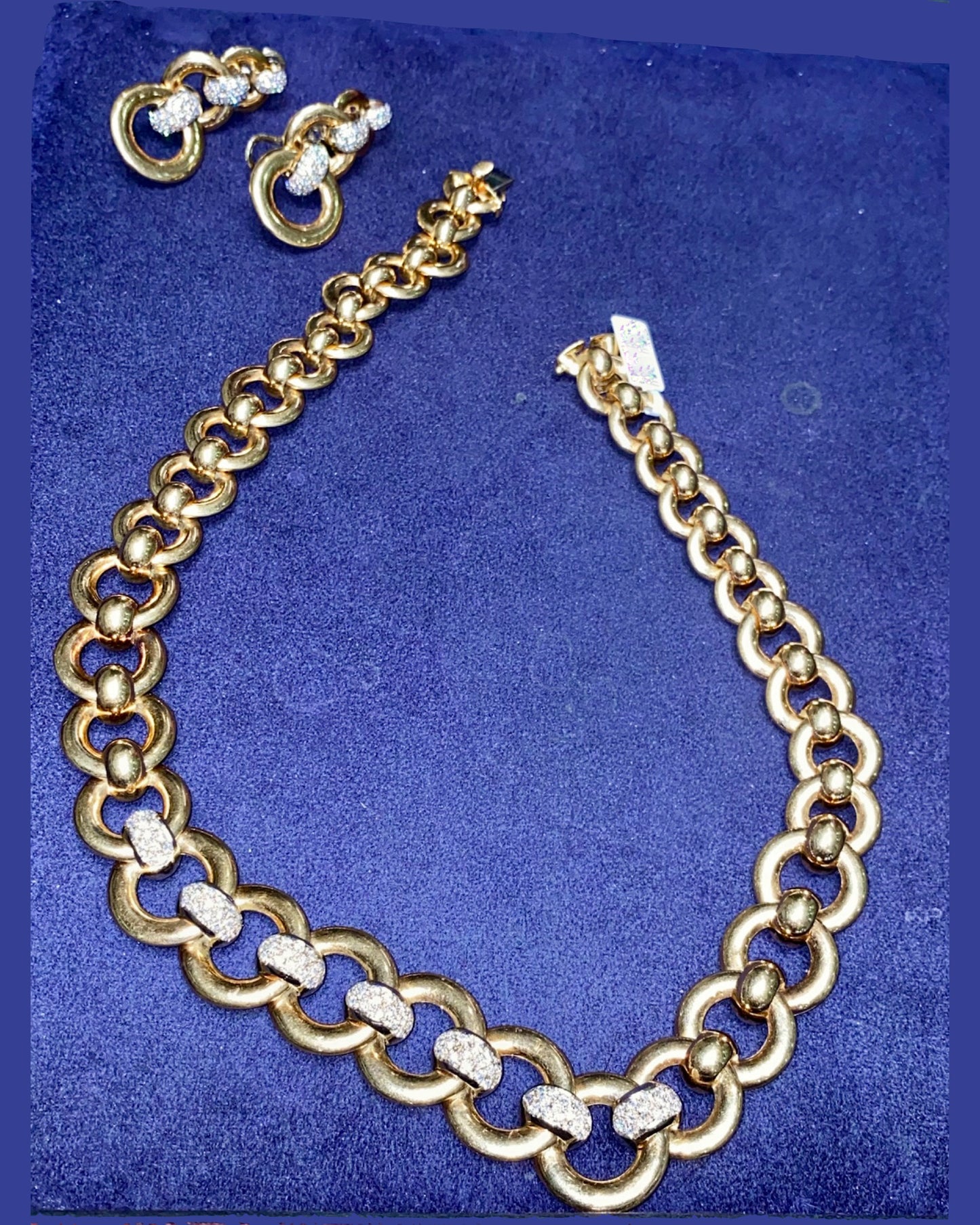
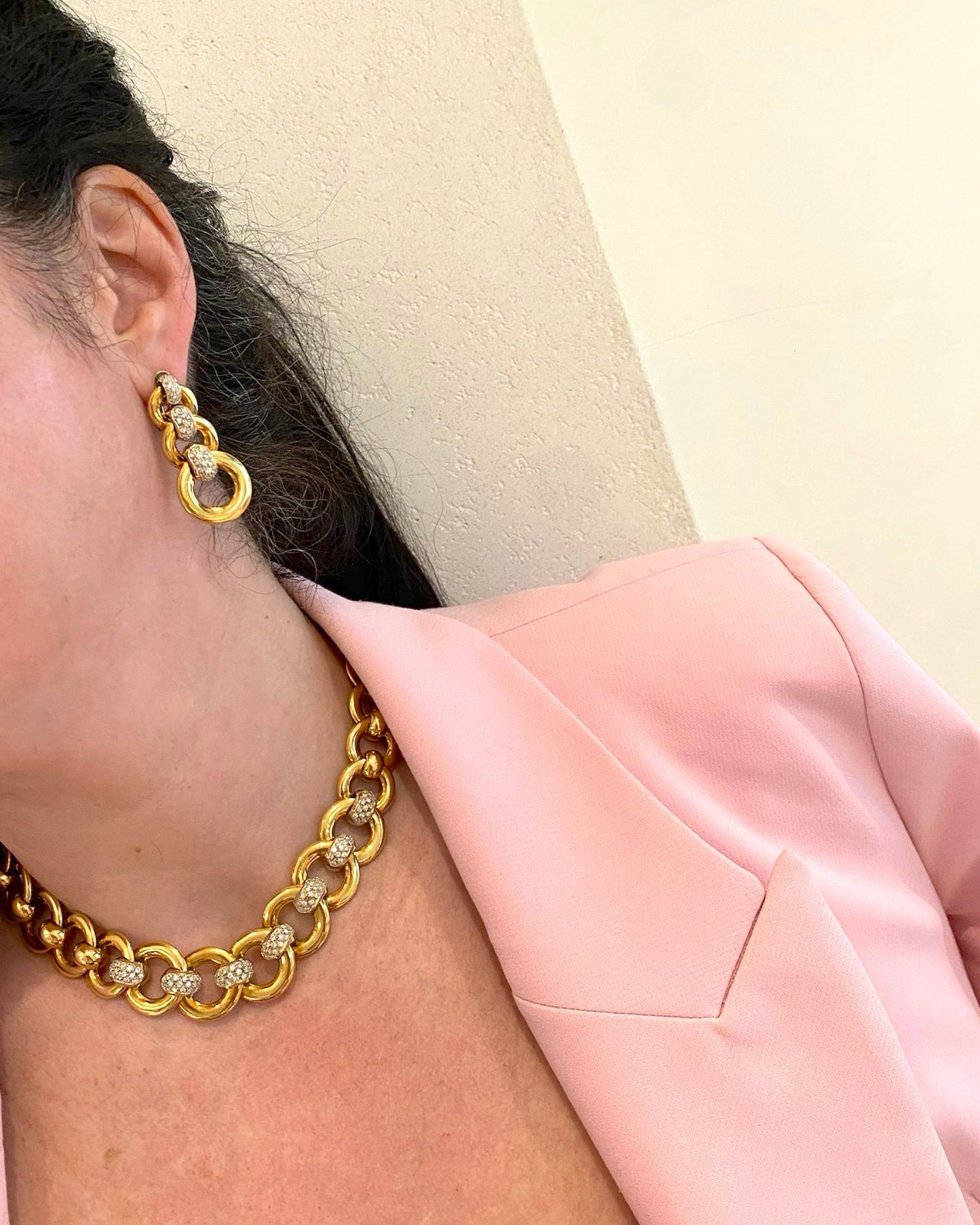
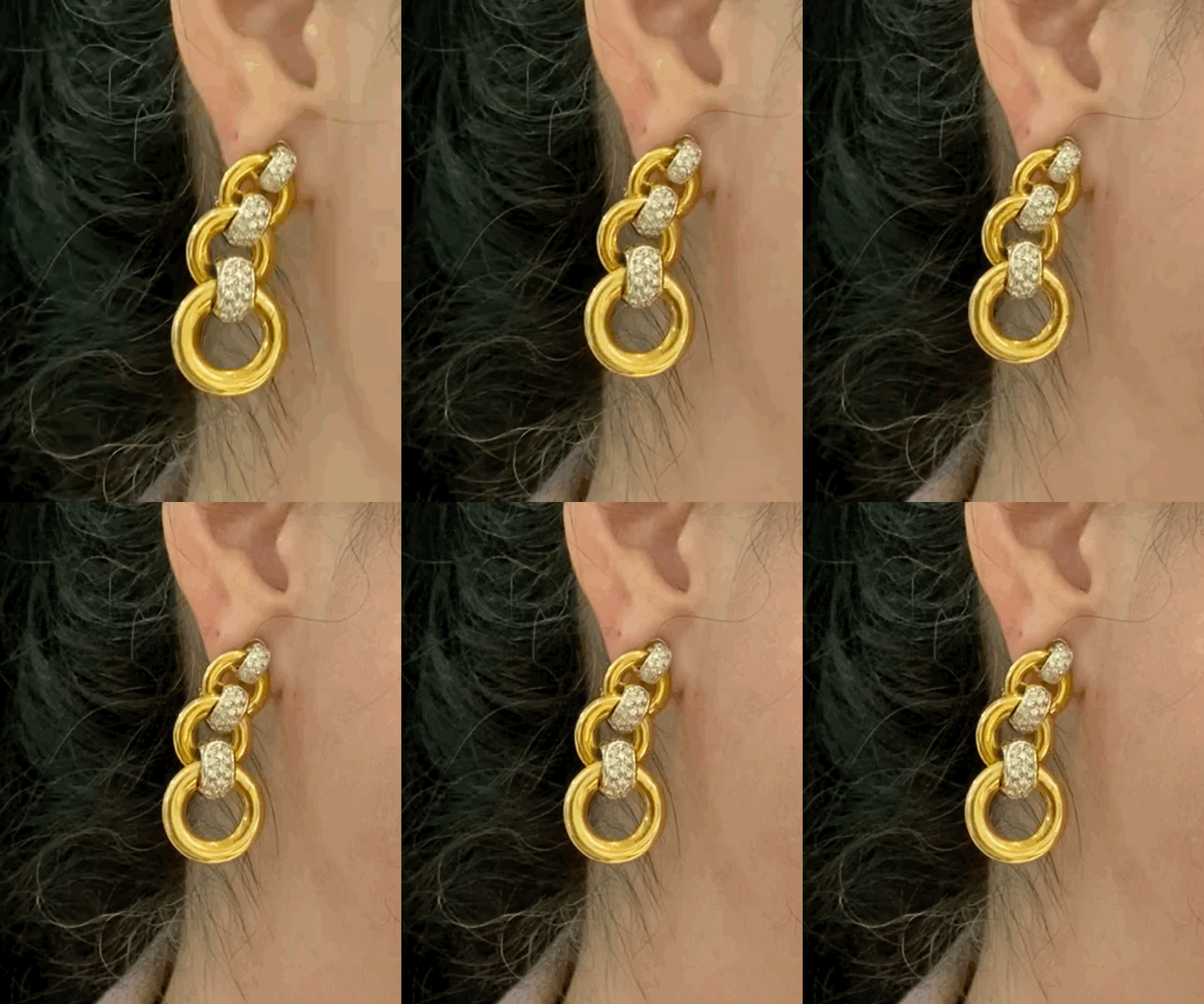
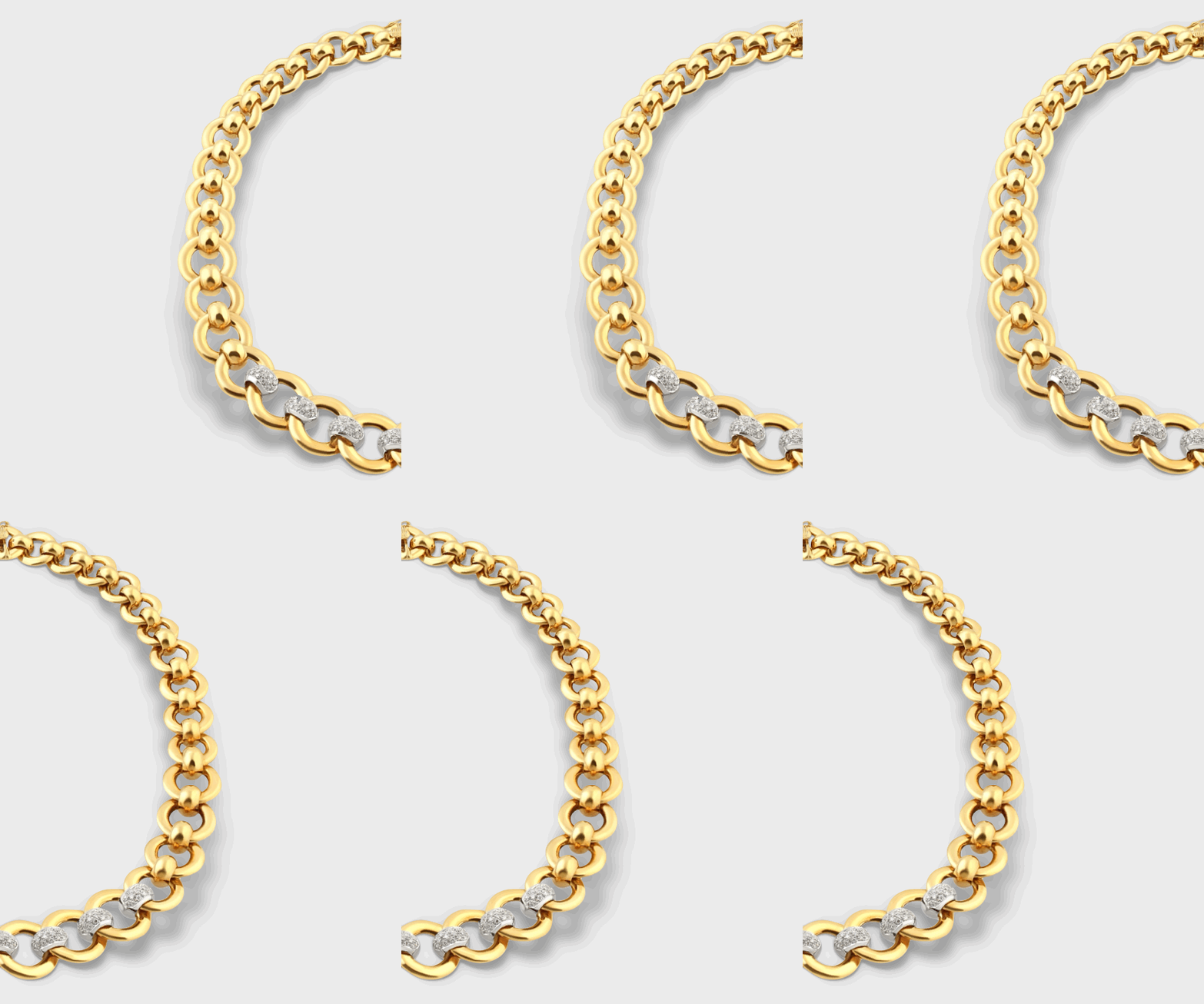
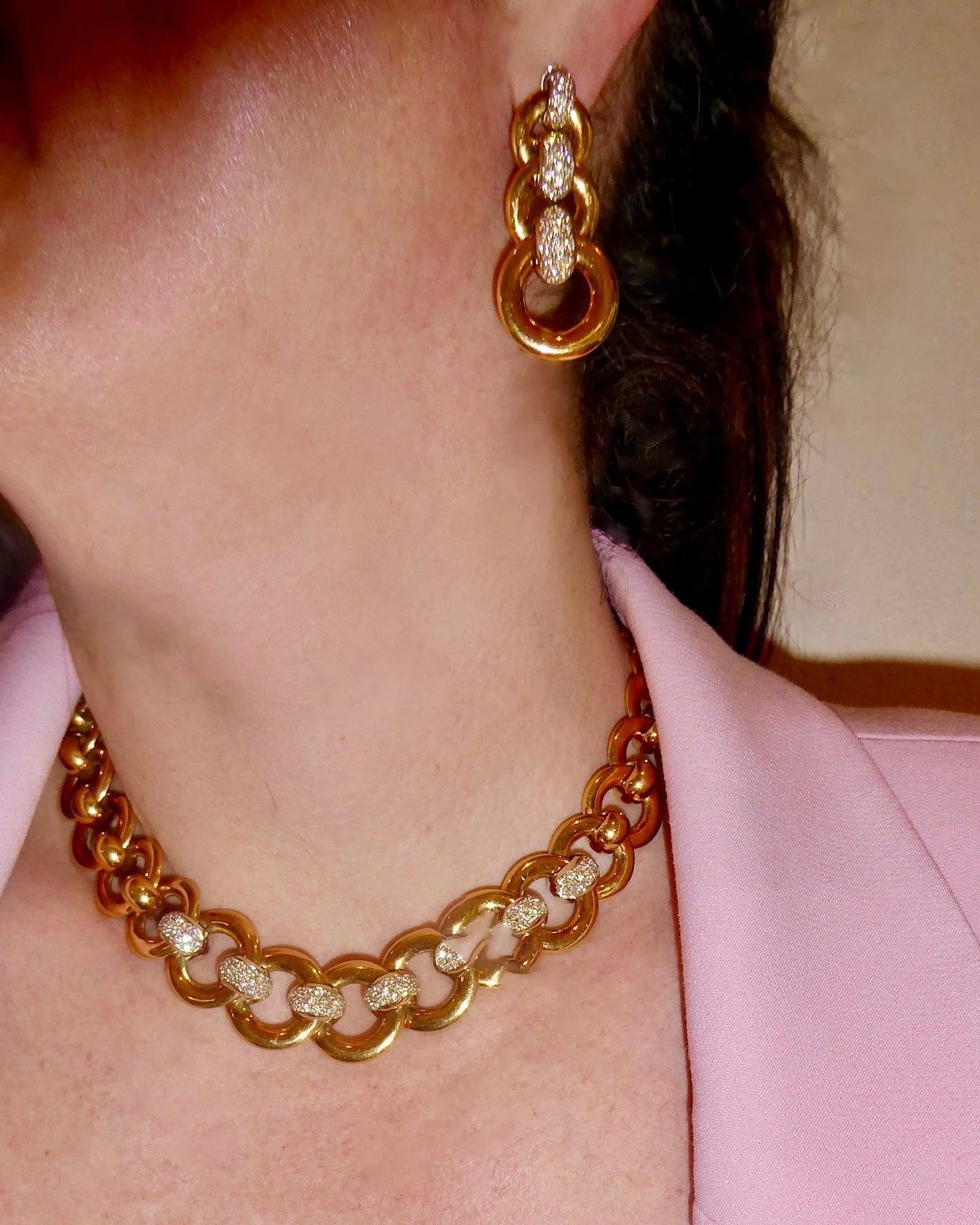
WEINGRILL DIAMOND & GOLD NECKLACE & EARRINGS, 20th CENTURY